
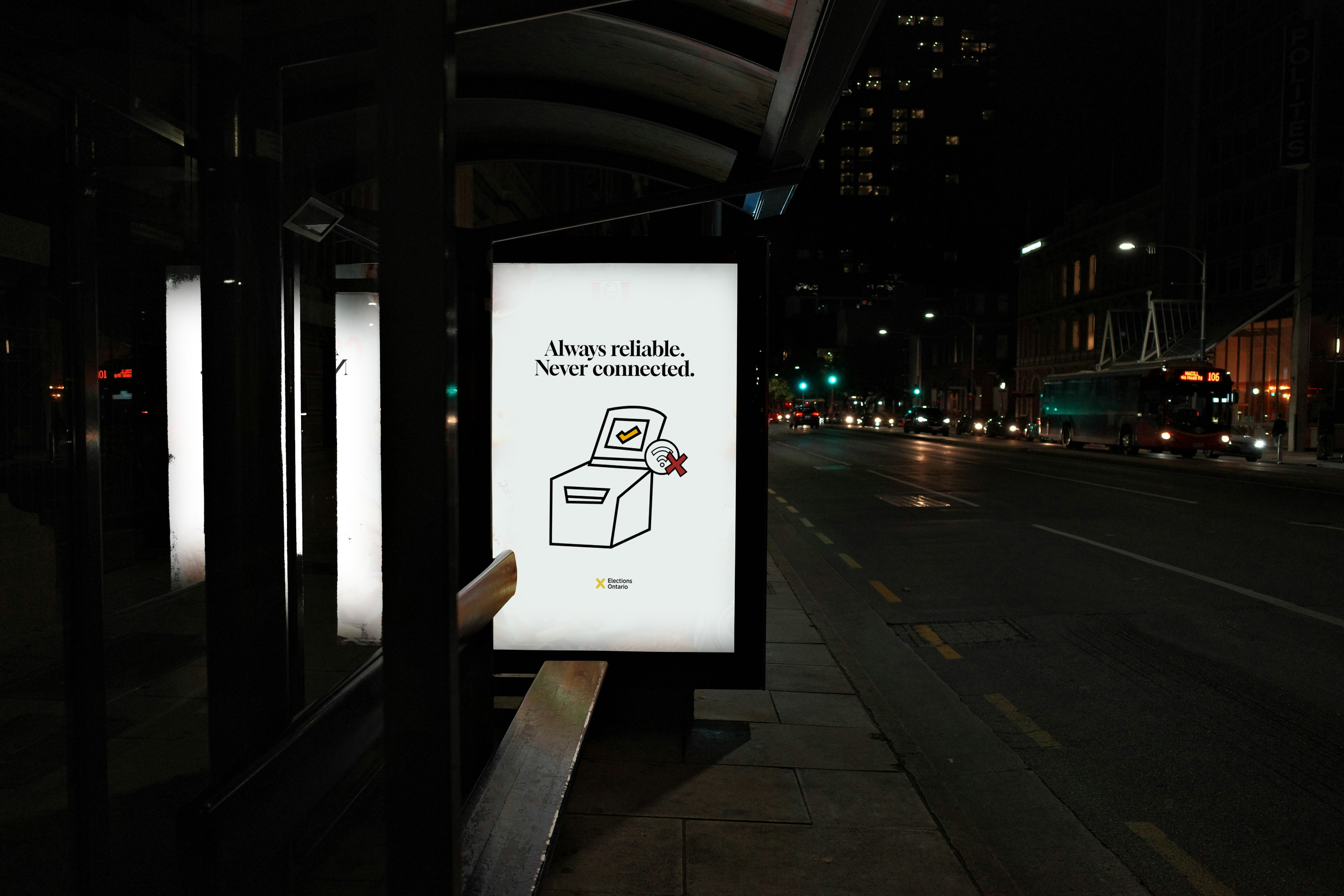
Combatting Mis/Disinformation at Elections Ontario
A Service Design Sprint
THE PROJECT:
During the 2025 Provincial Election, false information about voting spread on social media faster than Elections Ontario official corrections could keep up.
Responses were reactive by nature, where a myth would circulate and then get debunked after the fact. It became clear that there was an opportunity to get ahead of misinformation, by filling gaps in public knowledge before false claims could.
This project aimed to discover how we might lift the curtain on EO’s internal processes so voting integrity is protected, and voters can trust that every vote counts.
THE OPPORTUNITY:
As the first project I worked on when starting at Elections Ontario, this project was presented to myself and a member of the Research team, to give us exposure into a pressing organizational issue, and building an understanding of how service design and research intersect in problem solving. Working together in a design sprint, we set out to understand the problem of voting misinformation and explore what a proactive solution could look like.
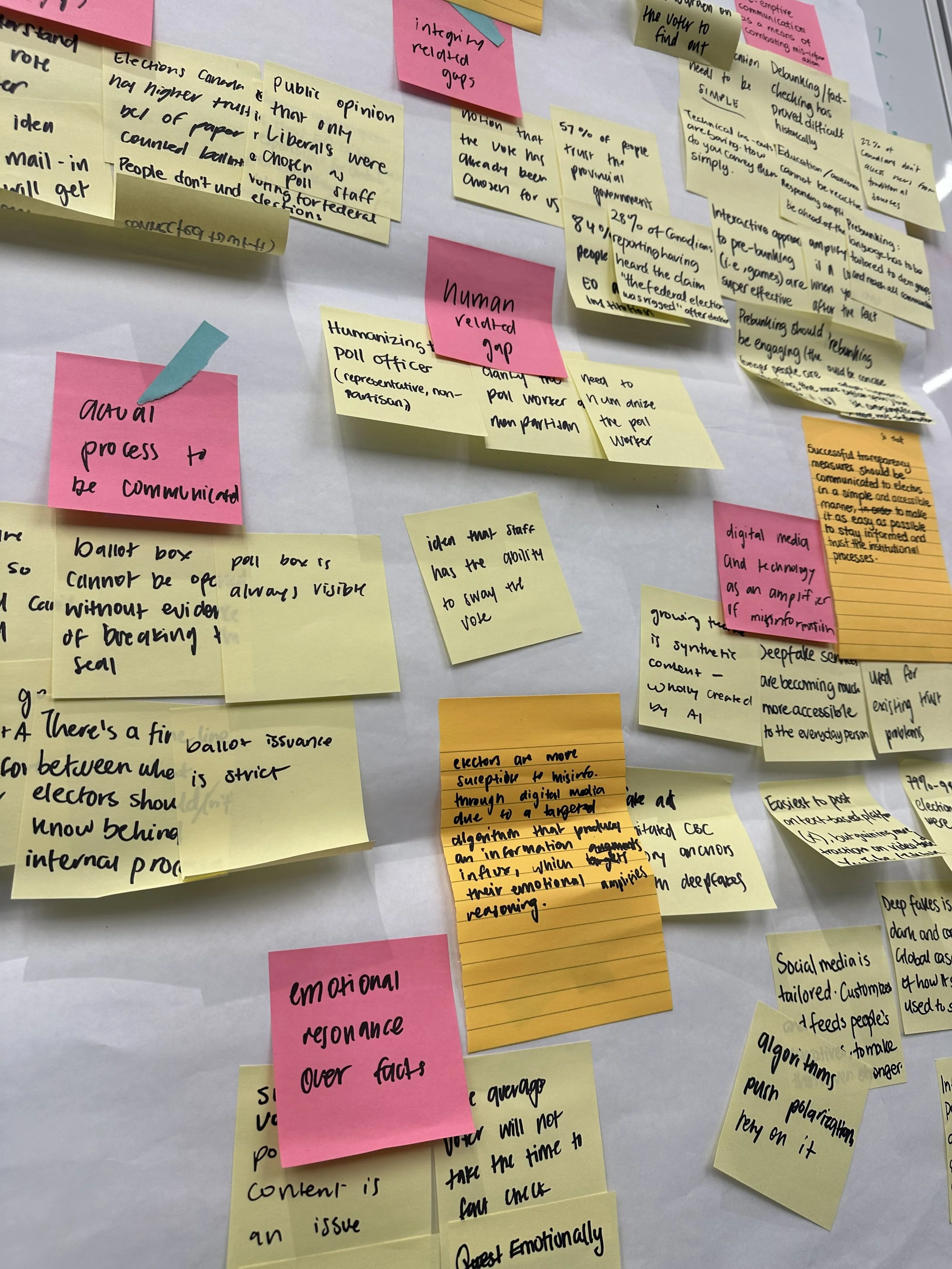
Through environmental scans of legislation and past public discourse, and stakeholder interviews with EO staff in charge of monitoring mis/disinformation trends, we were able to map the voter's journey, synthesize patterns through affinity mapping, and identify moments of intervention.
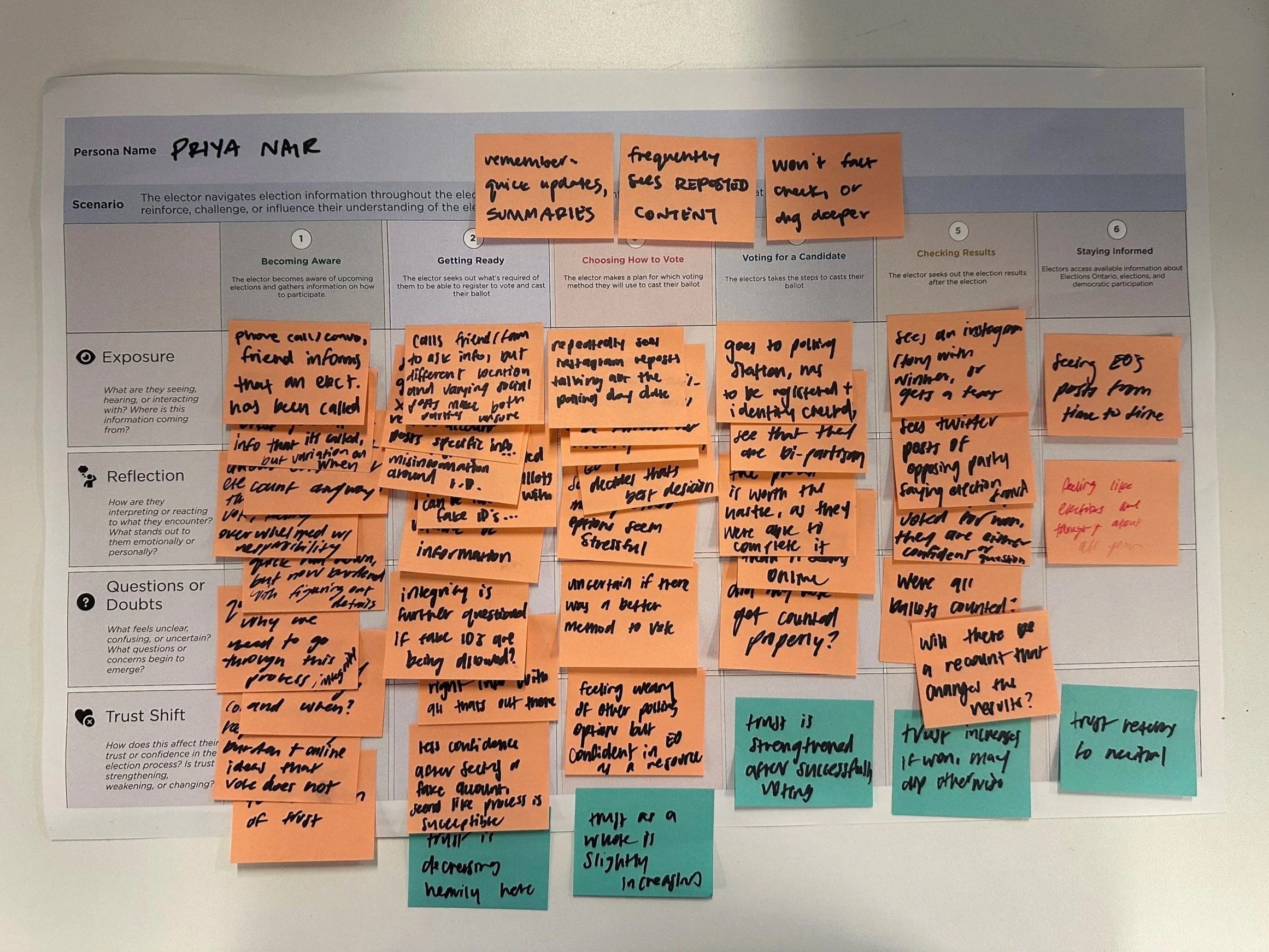
Mapping the user journey revealed that voters are most susceptible to false information in the periods right before voting, and right after. This was because there lacks a central voice of truth amidst social media noise. The task, then, became about making the voter feel aware and confident about electoral processes well before Election Day, and supported throughout their experience.
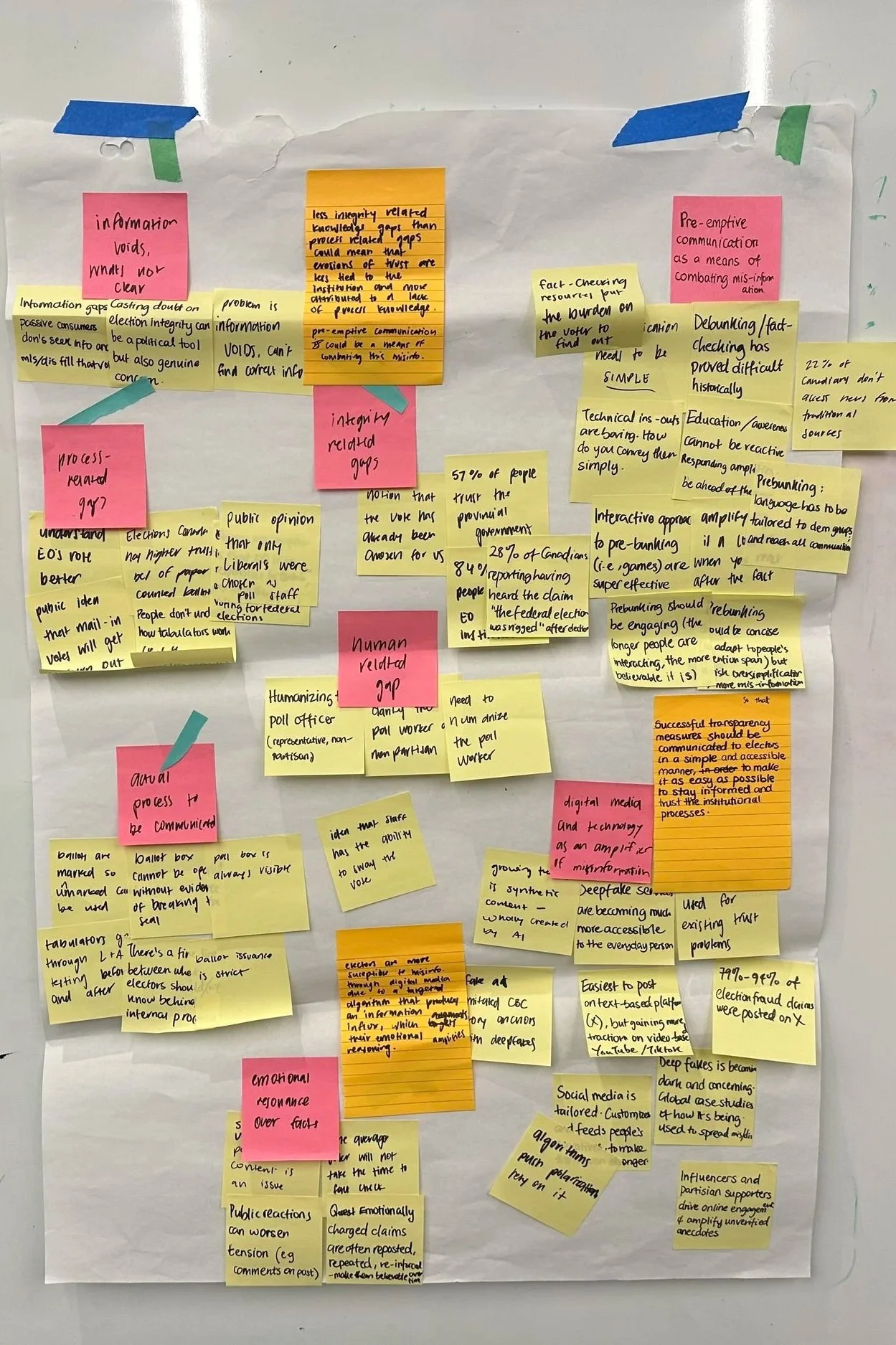
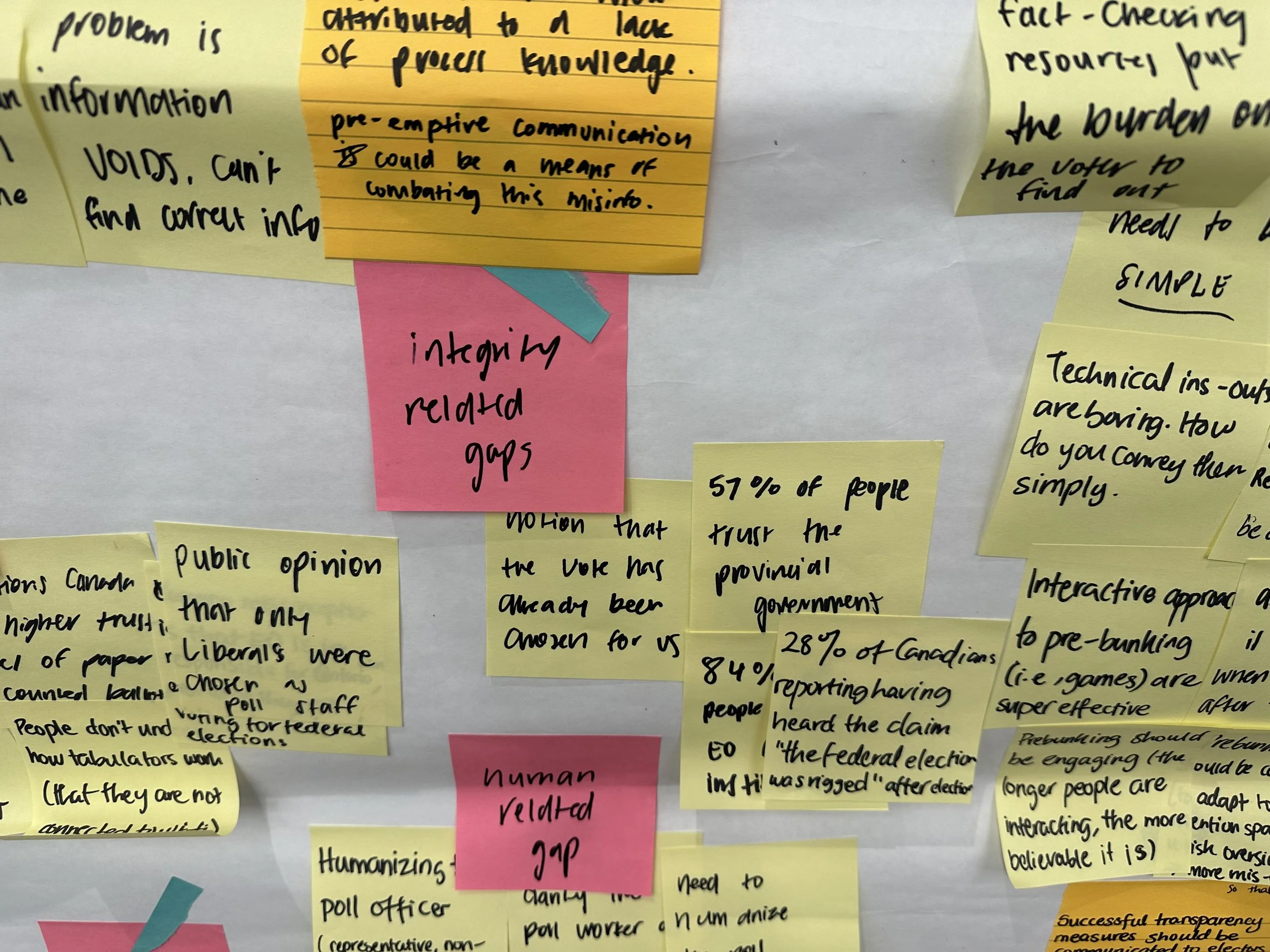
Affinity mapping of research insights.
THE IMPACT:
What emerged was a cyclical approach to combatting misinformation, in which the priority was monitoring real-time trends, developing simple, informative advertising campaign material that debunks myths, and meeting users where they are finding information. This emerged out of storyboarding of ideas surrounding pre-emptive awareness, exploring different methods of strengthening public knowledge through information and media, and then carefully evaluating and refining their feasibility.
The sprint concluded with two media-based prototypes, along with a set of recommendations on how Elections Ontario should approach public communication around misinformation, which we presented to EO Compliance Officers. The recommendation to monitor misinformation trends in real time resonated most, as it connected directly to their existing compliance work, and the recommendations as a whole were used to reinforce how they approach voter communication.
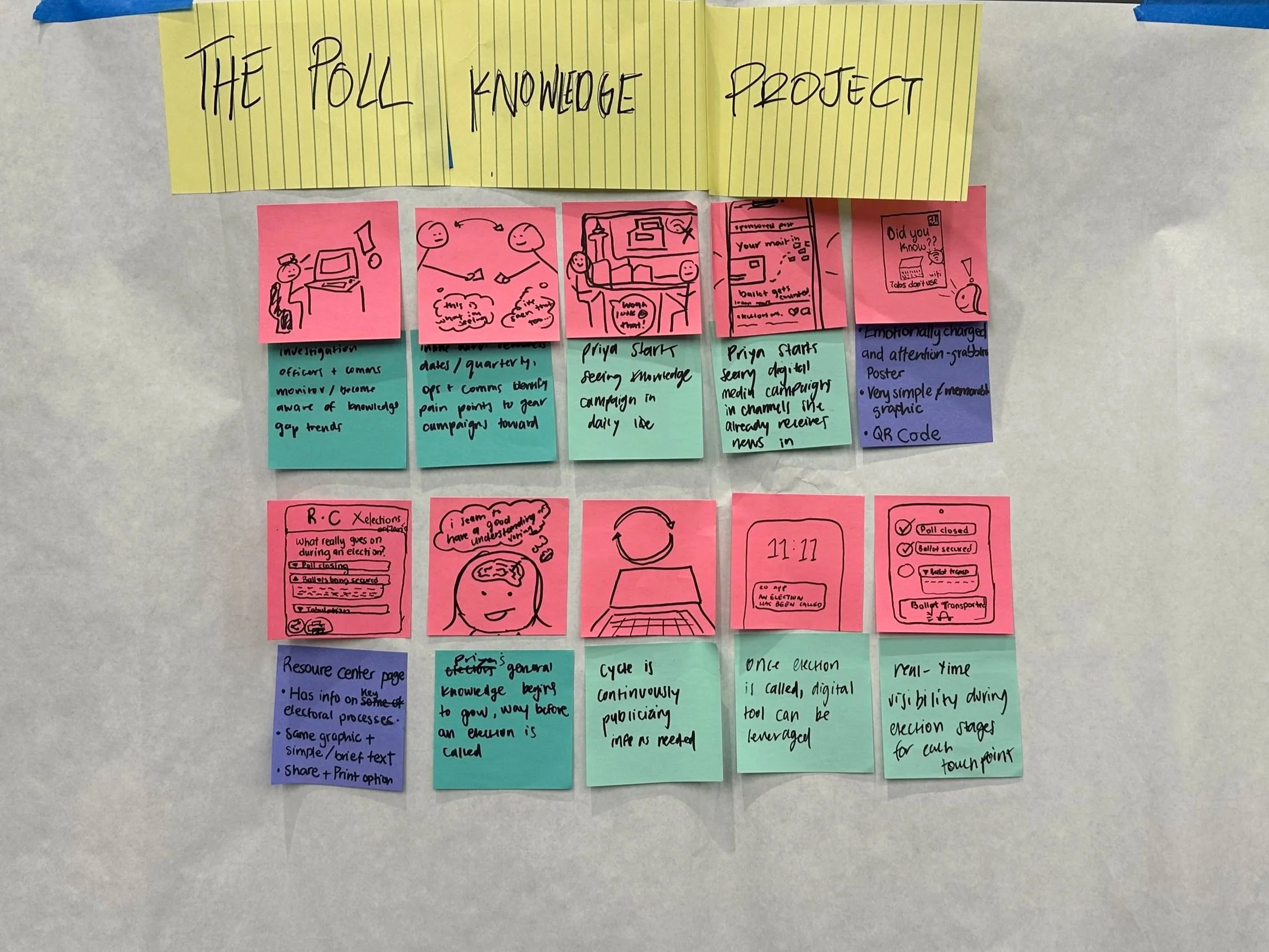
Storyboarding of final prototype.
This project allowed me to learn and immerse myself into Service Design research methods, and practice doing primary research for a real organizational concern. At times the process felt challenging, with little room to pause for reflection as the design sprint only lasted a week. Overall, the pace allowed me to learn and adapt to a government environment and build my foundations regarding many aspects of SD research and development.
With more time, I would have loved to explore how different narratives related to past trends of misinformation could be combatted through messaging, and how these media campaigns could link to a real-time tool walking electors through the voting process.
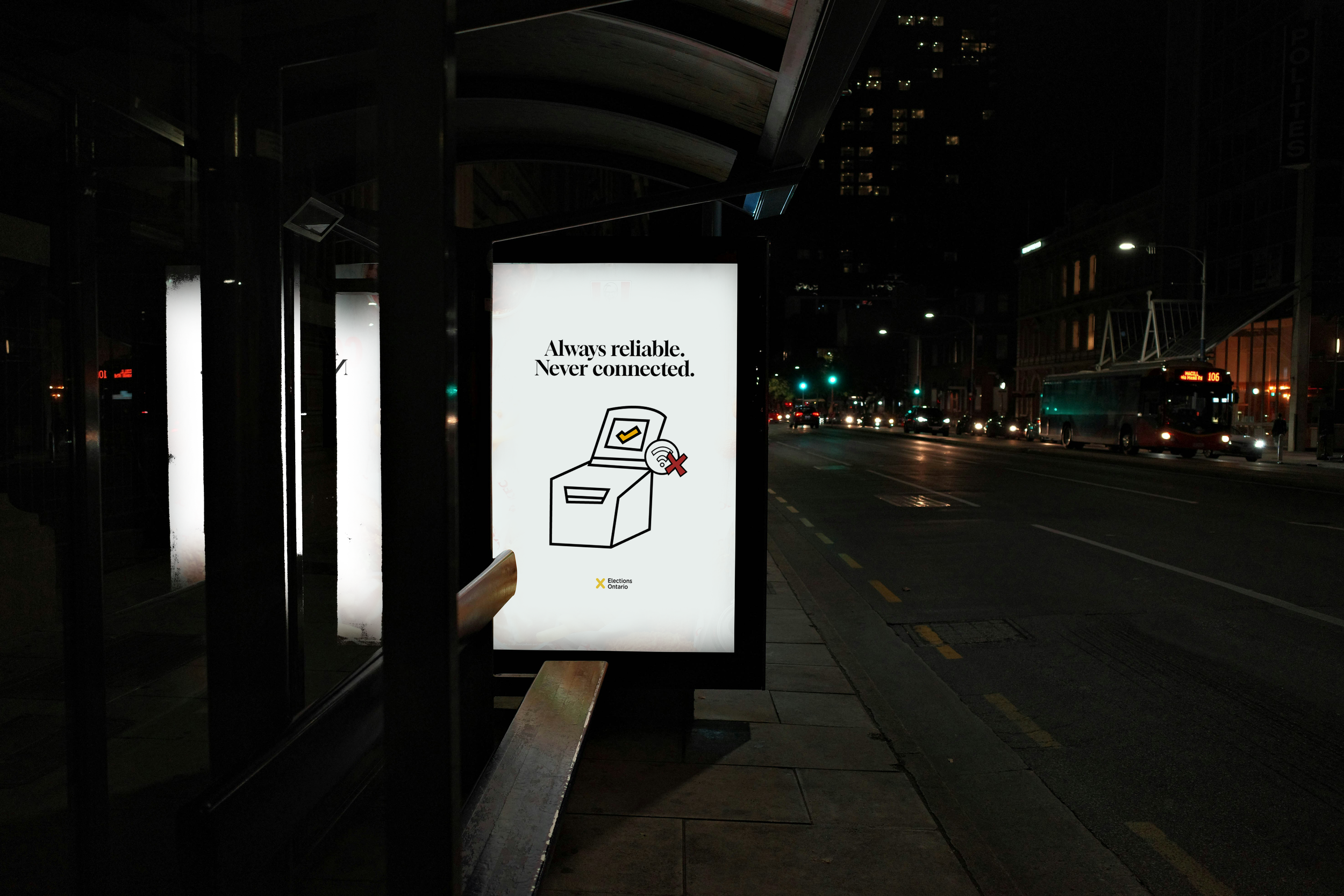
Future state versioning of our solution.